
Chief Almighty
Phantix GamesStrategy
4.68.64K Reviews
- Version
- 2.5.235
- Installs
- 10.00M
- Age Rating
- Teen
Screenshots

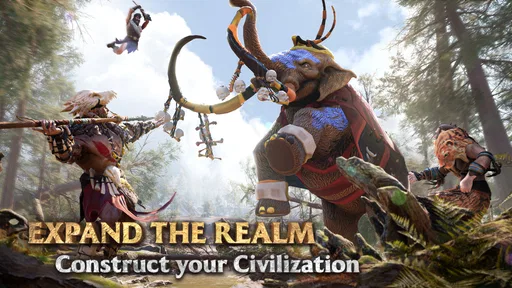
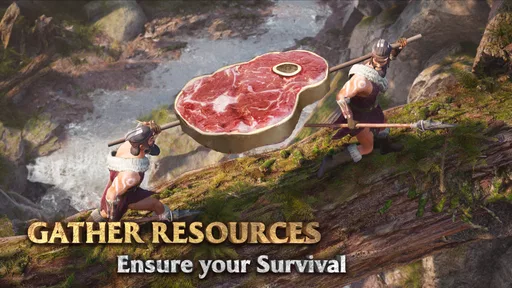
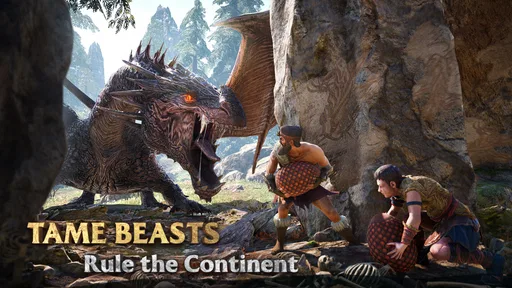

Our Review of Chief Almighty
 Analysis by Appyee
Chief Almighty is the kind of strategy game I would recommend to someone who enjoys building a settlement while constantly having to think about threats, resources, and other players. Its setting mixes fire, beasts, and stone with a prehistoric-fantasy atmosphere, but the real appeal is the steady pressure to make sensible decisions rather than simply tap through a story. I found it most enjoyable when I treated every upgrade as part of a larger plan instead of chasing whatever button happened to be available.
That distinction matters because this is not a quick puzzle game or a self-contained campaign that I can finish in a few evenings. It is a long-term mobile strategy experience from Phantix Games, designed around gradual progress and an increasingly busy base. The free entry point makes it easy to try, while the Teen rating reflects a world built around conflict and survival. My overall view is positive, but with an important qualification: Chief Almighty works best for patient players who like routine planning, not for people looking for short sessions with a clear ending.
How the prehistoric strategy loop feels in practice
At the center of the experience is the familiar strategy rhythm of developing a settlement, improving its capabilities, and preparing for the next challenge. What gives the game its identity is the way that loop is presented through a tribal world of rugged terrain, powerful creatures, and competing forces. The theme is not just a decorative skin over a modern city builder. It gives the decisions a more immediate feeling: growth is tied to survival, and a stronger base should help me withstand whatever the map sends my way.
I quickly learned that the most satisfying progress comes from linking activities together. An isolated upgrade can make a building look more advanced, but a well-timed sequence of improvements gives the whole settlement more momentum. I prefer to decide what I want to accomplish over the next few play sessions, then spend resources in a way that supports that goal. That approach is more rewarding than upgrading randomly, especially when several improvements compete for the same limited pool.
The game also suits players who enjoy checking in regularly. A short visit can be used to collect progress, begin another improvement, review the state of the settlement, and leave with a clear next task. A longer session gives more room to examine the broader situation and prepare for conflict. I would not call it a purely casual game, because meaningful progress depends on attention over time, but it does fit naturally into a daily mobile routine.
Why the setting helps the strategy stand out
Many mobile strategy games use castles, modern armies, or science-fiction colonies as their visual language. Chief Almighty takes a different route with a rougher world shaped by elemental danger and giant beasts. That choice makes the game easier to remember, and it also affects the mood of the decisions. I feel less like I am managing an efficient spreadsheet and more like I am trying to keep a vulnerable tribe growing in an unpredictable environment.
The visual identity is particularly useful when the screen becomes crowded with tasks. Buildings, characters, and threats belong to the same world, so the presentation feels more coherent than a collection of unrelated menus. The theme will not transform the underlying strategy formula, but it gives familiar systems a stronger personality. For me, that was enough to make the early development phase feel inviting rather than anonymous.
The store summary asks whether the player can become the Chief Almighty, and I think that idea is best understood as a long-term leadership challenge rather than a single dramatic objective. The game keeps asking me to balance immediate needs against future strength. Do I improve the base now, prepare for a confrontation, or preserve resources for a more important development later? Those small choices create the sense of responsibility that the premise promises.
Planning is more important than constant activity
One of the less obvious lessons is that activity alone does not equal progress. It is tempting to keep every available action running, but that can leave the settlement poorly prepared for the next requirement. I get better results when I group tasks by purpose. If I am focusing on development, I avoid spending resources impulsively on secondary improvements. If I expect pressure from outside, I make readiness the priority instead of assuming that a larger-looking base is automatically safer.
This is also where the game separates itself from simpler idle builders. In an idle-focused alternative, I might return mainly to collect rewards and repeat a predictable cycle. Here, I get more value from returning with a plan. Even when the individual actions are familiar, the order in which I take them changes how quickly the settlement becomes useful. That extra layer is a strength, although it also means the game demands more attention than its mobile format may initially suggest.
My practical tip is to choose one main objective before opening the game. It could be strengthening the settlement, preparing for a dangerous encounter, or making progress toward a particular development path. I then treat everything else as secondary unless it directly supports that objective. This prevents the common mistake of spreading resources so thinly that nothing feels meaningfully improved.
Where the strongest evidence of quality appears
The strongest part of Chief Almighty is its ability to turn repeated management into a sense of ownership. I start caring about the settlement because its condition reflects my choices. A good session ends with more than a full resource bar; it ends with a clearer position and a better understanding of what I need to do next. That feeling is difficult to create in a game that relies on menus and timers, but the setting and strategic pressure work together effectively.
The game has also built a substantial audience. It carries a 4.6 average from around 147 thousand ratings, and it has passed 10 million installs. Those figures do not guarantee that every player will enjoy the pacing, but they do suggest that the combination of tribal fantasy and persistent strategy has found a broad audience. I can understand why: the theme is accessible, the basic goal is easy to grasp, and the deeper planning gives committed players reasons to keep returning.
For someone coming from a traditional strategy game on a computer or console, the main adjustment is the pace. Chief Almighty is not built around one concentrated match in which every decision is resolved immediately. Its satisfaction comes from accumulation. I make a choice, let the settlement develop, return to evaluate the result, and then revise my plan. Players who accept that rhythm will probably find the structure comfortable; players who want instant tactical resolution may find it slow.
The everyday scenario where it makes sense
I can easily see myself using it during a normal day in short but purposeful visits. In the morning, I might check whether an improvement has finished and start the next one before work or school. Later, I could review the settlement, collect what is ready, and decide whether my resources should support growth or protection. In the evening, I would have enough time to examine the wider situation and make a more deliberate choice for the next cycle.
That routine works because the game gives each visit a practical role. I am not opening it only to watch numbers rise. I am checking whether my earlier decision created the position I wanted. If it did, I continue the plan; if it did not, I adjust. This makes the game a better fit for people who enjoy light project management than for people who want a game that demands complete concentration from start to finish.
There is a trade-off, though. A game built around repeated visits can become part of a player’s daily schedule, and that is not automatically a benefit. If I already have several ongoing mobile games, Chief Almighty may compete for the same attention. I would choose it over another similar title only if its prehistoric atmosphere and long-term settlement planning appealed to me more than a different game’s combat style or faster pacing.
What may frustrate new players
The biggest weakness is the amount of patience the structure can require. Progress feels more meaningful when I plan ahead, but planning also makes mistakes more noticeable. Spending resources on the wrong priority can leave me waiting for the next opportunity to correct the situation. That friction is part of the strategy, yet it can feel discouraging when I want a quick sense of achievement.
The free-to-play model deserves careful attention as well. The game is free to download, with in-app purchases ranging from $0.99 to $99.99 per item. I would approach those purchases as optional convenience rather than as a reason to rush. The important question for me is not whether spending exists, but whether I can enjoy the planning loop without feeling pressured to spend whenever progress slows. Players who dislike any form of purchase-driven acceleration should think carefully before committing to a persistent strategy game.
My advice is to play slowly at first and learn the value of each resource before considering a purchase. A payment made before understanding the progression can solve an immediate problem without improving long-term decision-making. If I do spend, I would want it to support a clear goal rather than compensate for an avoidable planning mistake. That mindset keeps the game’s strategic side in control.
Another limitation is the potential mental overhead. As the settlement develops, there are more things to monitor, and the game’s appeal depends partly on accepting that growing complexity. Someone who wants a clean, minimal interface and a single obvious objective may prefer a compact puzzle or a short tower-defense session. Chief Almighty is better for players who enjoy having several connected decisions in motion.
Who should play it, and who should skip it
I think the best audience is made up of players who enjoy base-building, resource management, and a fantasy world with a tribal edge. It is especially suitable for people who like returning to the same settlement over time and seeing their earlier choices shape later possibilities. If you enjoy making a plan, checking its results, and improving the plan on the next visit, the game has a strong chance of holding your attention.
It is also a sensible choice for someone who wants strategy without the immediate intensity of a traditional real-time match. The longer progression gives me room to think, and the mobile format makes it easy to fit into spare moments. That does not make it effortless, but it does make the commitment more flexible than sitting down for a full competitive session.
I would skip it if I wanted a finished narrative, a purely offline-feeling experience, or a game that rewards every minute with a dramatic event. I would also hesitate if I knew I was likely to become frustrated by waiting, recurring management, or optional purchases. A compact tactics game would be a better alternative for immediate battles, while a simpler idle builder would suit someone who wants minimal decision-making. Chief Almighty earns its place only when the player actually wants the ongoing responsibility of a developing settlement.
Device compatibility is broad enough for many older phones and tablets, since the minimum requirement is Android 6.0. The current version is 2.5.235, which is useful to know when checking whether a device can run it. I would still make sure the device has enough room and that its performance is comfortable for a visually active strategy game, but the stated operating-system requirement is not especially demanding by modern standards.
My final recommendation
After spending time with Chief Almighty, I see it as a solid choice for players who want a persistent strategy game with a distinctive prehistoric-fantasy identity. Its best qualities are not a single flashy feature; they are the way the setting, settlement development, and long-term planning reinforce one another. I enjoy it most when I approach each session with a purpose and accept that progress is measured in decisions made well, not in instant rewards.
Phantix Games has created a game that is approachable at the beginning but increasingly asks for discipline. The free price makes trying it straightforward, while the Teen content rating signals that its world is built around conflict rather than gentle decoration. Its popularity is understandable, but the positive reception should not hide the fact that the pacing and monetization model will not suit everyone.
My verdict is favorable with a clear condition: download Chief Almighty if you want a long-running settlement strategy game and are comfortable progressing at a measured pace. Keep your early resources focused, return with a plan, and resist treating every slowdown as a problem that needs a purchase. If that style sounds satisfying, the game can become a reliable daily strategy habit. If you prefer quick matches, a complete story, or almost no maintenance, another type of strategy game will serve you better.
Verdict
Strengths of Chief Almighty
- Engaging tribal survival and city-building gameplay
- Large-scale battles add depth beyond resource management
- Hero progression gives long-term goals and strategic variety
- Active alliances make cooperation and diplomacy meaningful
- Stylized prehistoric world is colorful and easy to navigate
Limitations of Chief Almighty
- Progress can feel slow without frequent play or resource spending
- Many upgrades and systems may overwhelm new players
- Competitive events can favor players who make in-app purchases
- Requires a stable internet connection to play
- Notifications and timers may encourage frequent check-ins
Other Releases by Phantix Games
View All
Mafia City
Strategy4.5

Nexus War: Civilization
Strategy4.3

Savage Survival:Jurassic Isle
Strategy4.5

Dino Cataclysm: Survival
Strategy3.4
Similar Picks in This Category
View All
Clash of Clans
Supercell4.5

Plants vs. Zombies™
ELECTRONIC ARTS3.7

Lords Mobile: Kingdom Wars
IGG.COM4.5

Clash Royale
Supercell4.4

State.io — Conquer the World
CASUAL AZUR GAMES4.1

Car Driving School : Car Games
Spark Game Studios3.9
Frequently Asked Questions
What is Chief Almighty about?
Chief Almighty is a prehistoric survival and strategy game in which you lead a tribe, develop your settlement, gather resources, train warriors, and compete with other players. The game combines base building, exploration, hero development, alliances, and real-time battles. Your main objective is to strengthen your tribe, expand its influence, and survive threats from rival chiefs and wild creatures.
Is Chief Almighty free to download and play?
Chief Almighty is generally free to download on Android and iOS, allowing you to begin playing without paying upfront. However, it includes optional in-app purchases for items such as resources, upgrades, speed-ups, and special bundles. Progress is possible without spending money, but purchasing packages may reduce waiting times and provide advantages, especially for players competing actively in multiplayer events.
Does Chief Almighty require an internet connection?
Yes, Chief Almighty normally requires a stable internet connection because many of its core features depend on online servers. Base development, player-versus-player battles, alliance activities, events, rankings, and account synchronization are handled online. As a result, the game is not designed for full offline play, and interruptions to your connection may prevent you from accessing the main gameplay systems.
Can I play Chief Almighty with other players?
Yes, multiplayer interaction is one of the central parts of Chief Almighty. You can join or create an alliance, communicate with other members, participate in group events, help with construction and research, and coordinate attacks or defenses. The social systems add considerable depth, although players who prefer entirely solo experiences may find that the strongest progression often involves active alliance participation.
Is Chief Almighty suitable for casual players and children?
Chief Almighty can be suitable for casual players who enjoy checking in regularly to manage upgrades, collect resources, complete missions, and develop their tribe. Nevertheless, the game includes timers, competitive events, chat features, fantasy violence, and optional purchases, so parental supervision is recommended for younger users. Its long-term progression and frequent notifications may also be more appealing to strategy fans than occasional players.
Play our best games!


